 Skip to content
Skin Resurfacing · Kensington, London
Home / Chemical Peels Treatment
Chemical Peels in London, Depth Chosen for Your Skin
A chemical peel applies an acid solution to the skin so the outer layers loosen, lift away and are replaced by newer skin underneath. Chemical peels are available at Faciem Dermatology & Medical Clinic on Kensington Church St, London, led by Dr Prasad, at four depths: from a £90 glycolic refresh to a £1,000 controlled depth resurfacing peel.
Depth is the whole decision. The two light peels can be booked directly. The ZO 3 Step and Controlled Depth peels are performed by Dr Prasad after a face-to-face consultation and a period on medical-grade skincare, because prepared skin behaves differently under a strong acid.
- Four peel depths
- ZO Skin Health formulations
- All skin types and tones
- Kensington clinic

96%
Patient satisfaction
- Medically reviewed by Dr Prasad
This page sets out how peel depth is chosen at Faciem, what each depth involves and what it costs, and is checked for clinical accuracy.
Last reviewed: 15 September 2026.
Patient information only. Peel depth, suitability and preparation are decided individually, and results vary between people and skin types.
Patients since 2019
Procedures
Satisfaction
TL;DR
Chemical peels at Faciem run from a £90 ZO Stimulator Peel through to a £1,000 Controlled Depth Peel, with a Hydrafacial at £120 and the ZO 3 Step Peel at £450. An appointment takes 30–45 minutes. Light peels leave the skin fresher the same day; the deeper peels show their result from about two weeks, once peeling has finished. The two light peels can be booked directly, while the deeper peels are performed by Dr Prasad, a GMC-registered doctor, after a face-to-face consultation.
- Four depths, £90 to £1,000
- Same-day glow, or a week of peeling
- Deeper peels performed by Dr Prasad
Treatment at a Glance
Chemical Peels at a Glance
Procedure time
30–45 minutes
The appointment covers cleansing, the peel itself and your aftercare instructions.
Price
From £90
ZO Stimulator Peel® £90, Hydrafacial £120, ZO 3 Step Peel £450, Controlled Depth Peel £1,000
Results visible
Straight after, or from two weeks
Light peels give an immediate freshness; deeper peels show their change from about two weeks.
How often repeated
Light peels every 2–4 weeks
The ZO 3 Step Peel every six weeks until your skin is corrected, then every three to four months; the Controlled Depth Peel usually once.
Downtime
None to a week of peeling
Light peels cause minimal peeling; the 3 Step and Controlled Depth peels peel for about a week.
Back to work
Same day to one week
Light peels same day, the 3 Step Peel two to three days off, the Controlled Depth Peel a week.
*Prices are a guide and are confirmed in writing before treatment. The two light peels can be booked directly; the ZO 3 Step and Controlled Depth peels follow a face-to-face consultation with Dr Prasad and a period on medical-grade skincare.
About the Treatment
What Is a Chemical Peel and How Does It Work?
The acid, its strength and how long it stays on the skin decide everything that follows.

A chemical peel is a treatment in which a solution of acids is applied to the skin so that the outer layers loosen, lift and are replaced by newer skin underneath. Different acids and concentrations reach different depths, which is why one peel simply freshens a dull complexion while another is used for sun damage, pigmentation or scarring.
How a chemical peel changes the skin
A chemical peel loosens the bonds holding dead surface cells together, so those layers separate and shed over the following days. The skin that arrives underneath is smoother, and pigment that was sitting in the layers now gone tends to look lighter.
Depth is what separates one peel from another. A light peel works inside the outermost layer and leaves the skin looking fresher almost immediately. A deeper peel reaches further, which is why it is used for sun damage, pigmentation, pore size and acne scarring, and why its result takes about two weeks to appear. Facial skin is treated most often, though other areas can be treated where Dr Prasad judges it safe to do so. Too light a peel changes nothing; too deep a peel costs you recovery time you did not need.
Why peel depth is a medical decision
Peel depth is a clinical judgement about your skin, not a preference picked from a menu. Dr Prasad assesses the skin first, then advises according to your need and your budget. Two people with the same concern often need different peels, because skin type, how pigment behaves and how much recovery time you can take all change the answer.
Skin tone is graded on the Fitzpatrick scale, I to VI, before a peel depth is chosen. Deeper skin tones, Fitzpatrick IV to VI, can be peeled, but the acid, its concentration and how long it is left on are adjusted, and the preparation beforehand matters more, because the risk being managed is post-inflammatory pigmentation rather than the concern being treated. Experience counts for more here than on most treatments: the deeper the peel, the narrower the margin. Dr Prasad works with the full range including the deepest peels, treats all skin types, and has a particular interest in skin of colour, including Asian, Indian and Afro-Caribbean skin. On those skin tones creams are started weeks beforehand to lower the risk of hyperpigmentation afterwards, using ZO Skin Health or prescription products.
What a chemical peel feels like
Most people describe a chemical peel as uncomfortable but not painful. The solution usually brings warmth, tingling or a stinging sensation while it sits on the skin, and that settles once it is removed. Deeper peels feel stronger than light ones, and the sensation builds while the acid is working. What your skin is likely to feel, and what is done to keep you comfortable, is talked through at your consultation.
The appointment runs to 30–45 minutes, covering cleansing, the peel and your aftercare instructions. Afterwards the skin commonly feels red and tight before it begins to flake, and how obvious that is depends on the depth used. After the lighter peels most people go straight back to work the same day. Tell Dr Prasad during treatment if anything feels more intense than you expected.
The peel formulations Faciem uses
Faciem uses chemical peels from ZO Skin Health®, formulated in California. Each formulation is rigorously tested, with the percentages and ingredients adjusted to give an effective and predictable result. Working from one considered range, instead of a shelf of unrelated products, is part of why a skin’s response can be anticipated from one appointment to the next.
The two light options — a Hydrafacial® and the ZO Stimulator Peel — are superficial treatments meant to refresh and revive the skin, and can be booked directly without a consultation. The ZO 3 Step Peel and the Controlled Depth Peel are performed by Dr Prasad, and their quoted price covers both the treatment and the creams you use afterwards.
Peels alongside skincare and other treatments
A chemical peel rarely works alone. Before a deeper peel you need to be on medical-grade skincare so your skin cells are in an optimal state to respond, and afterwards that same routine is what protects the result. Sunscreen is advised after every peel, whatever its depth.
Used that way, peels and skincare together have treated severe sun damage, acne scarring and melasma over three to four months. A peel is a corrective treatment, and holding on to the result depends on what you do between appointments. Where a concern needs more than resurfacing, Dr Prasad may also discuss other approaches such as lasers. Which combination suits you is settled at consultation, and results vary between individuals.
Peel Depths & What They Treat
Which Chemical Peel Is Right for Your Skin?
Faciem works with four peel depths, and choosing between them is the whole decision. Light peels refresh the surface and barely interrupt your week. Deeper peels reach further and ask for recovery time in exchange. Your concern, your skin type and your diary settle which one is sensible.
ZONE I
The four peels we offer
From a light refresh to a deep resurfacing peel, with prices and intervals.
Hydrafacial
A light glycolic peel that cleanses and exfoliates, priced at £120 and repeated about every four weeks when it is used for upkeep. Peeling is minimal and most people return to work the same day.
ZO Stimulator Peel
A superficial glycolic peel at £90, repeatable every two weeks and intended to refresh and revive the skin. Like the Hydrafacial, it needs no prior consultation.
ZO 3 Step Peel
A TCA peel at £450, repeated every six weeks until your skin is corrected and then every three to four months. Expect about a week of peeling and two to three days away from work.
Controlled Depth Peel
The deepest peel used at the clinic, at £1,000 and usually performed once. Peeling lasts around a week, and most people take a week away from work.
ZONE II
Where a peel can be used
The face is treated most often, but it is not the only option.
The face
Facial skin is what chemical peels are most often used on, and where the widest range of depths is available.
Other areas
Other areas can be treated where Dr Prasad judges it safe to do so after examining the skin. Suitability is confirmed at consultation, never assumed from the enquiry.
ZONE III
Concerns a peel may improve
What the lighter and deeper peels are actually chosen for.
Sun damage and age spots
Deeper peels are used for sun damage and the brown spots that follow years of exposure. How much lifts depends on how deep the pigment sits.
Pigmentation and uneven tone
Hyperpigmentation, dull or sallow skin and uneven tone are among the concerns peels are chosen for. Deeper pigment generally needs a deeper peel.
Acne and acne scarring
Comedonal acne, inflammatory acne and acne scars are all listed among what peels may improve. Where the acne is still active, a full acne treatment plan usually comes first, and scarring needs a course of peels.
Texture, pores and rough skin
Rough texture, fine lines, enlarged pores, keratosis pilaris, dry skin and thickened scaling skin are also treated with peels.
Choosing the Right Treatment
Chemical Peel or Hydrafacial: Which Should You Book?
Chemical peels and the Hydrafacial sit at different points on the same scale. A Hydrafacial is itself a light glycolic peel, used to cleanse, exfoliate and refresh with almost no interruption to your week. The deeper peels reach further into the skin and are chosen to correct something specific. Plenty of patients use both, at different times and for different reasons.
| Deeper chemical peels | Hydrafacial | |
|---|---|---|
| How it works | A stronger acid solution reaches beyond the surface layer, so more of the epidermis is shed and replaced. | A light glycolic peel that cleanses and exfoliates the surface of the skin. |
| Best for | Sun damage, pigmentation, pore size and acne scarring — concerns that need correcting. | A pre-event or pre-holiday freshen-up, and regular upkeep between deeper treatments. |
| Results appear | From about two weeks, once the peeling has finished. | Straight after the appointment. |
| How often repeated | The ZO 3 Step Peel every six weeks until the skin is corrected, then every three to four months; the Controlled Depth Peel usually once. | About every four weeks when it is used for maintenance. |
| Downtime | About a week of peeling, and two to three days to a week away from work. | Minimal peeling, with most people back at work the same day. |
| Ideal candidate | Someone with a specific concern who can plan recovery time and is willing to prepare the skin beforehand. | Someone who wants their skin to look well now and has no time to spare for peeling. |
Results vary between individuals and neither option suits everybody. If a peel is not the right answer for your skin, Dr Prasad will tell you so at the consultation and set out what the alternatives are.
Transparent Pricing
How Much Does a Chemical Peel Cost in London?
Chemical peels at Faciem start at £90 for the ZO Stimulator Peel, with a Hydrafacial at £120, the ZO 3 Step Peel at £450 and the Controlled Depth Peel at £1,000. What you pay follows the depth your skin needs, not the area treated. The two deeper peel prices include the creams you use afterwards, so the figure quoted is not the opening line of a longer bill.
Comparing peel prices across London is harder than it looks, because one word covers very different treatments. A light glycolic peel and a deep resurfacing peel are both called a peel, yet they differ tenfold in cost, in what they reach and in what they ask of your week. Ask any clinic which acid is used, at what concentration, who applies it and what the price includes.
A course is usually needed, so ask about the whole series before you start and not only about the first appointment. Photographs taken at review appointments are the honest way to judge whether it is working.
| Treatment | Price |
|---|---|
| ZO Stimulator Peel | £90 |
| Hydrafacial | £120 |
| ZO 3 Step Peel, including post-peel creams | £450 |
| Controlled Depth Peel, including post-peel creams | £1,000 |
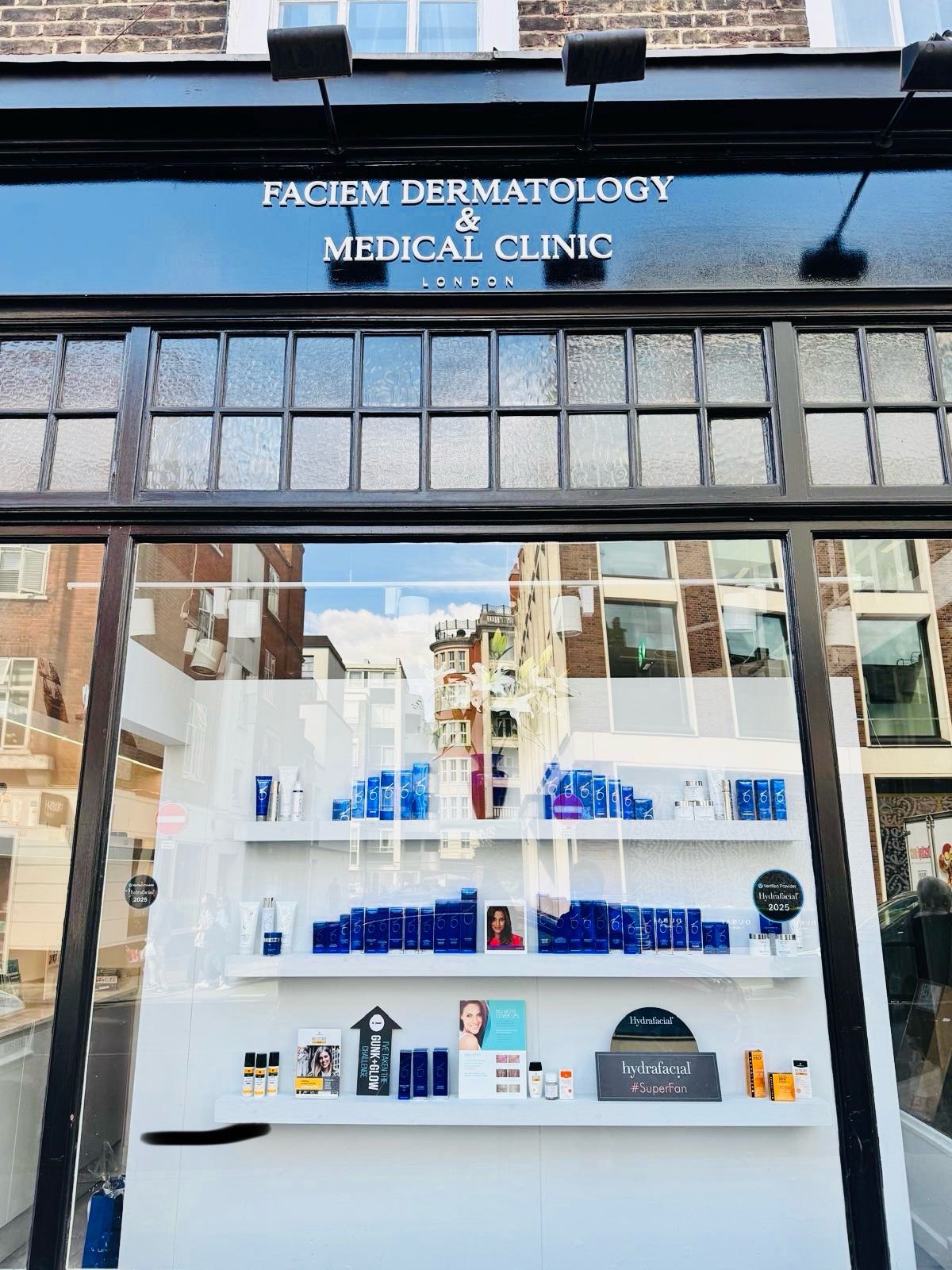
Why Faciem
Why Have Your Chemical Peel at Faciem?
A chemical peel is only as good as the judgement behind it. Dr Prasad performs the ZO 3 Step and Controlled Depth peels herself, once your skin has been examined and prepared; she is registered with the GMC and has 20 years’ experience in dermatology and aesthetics. The two light peels are available without that formality, because they do not call for it.
- Depth decided after your skin is examined, not chosen from a price list
- ZO 3 Step and Controlled Depth peels performed by Dr Prasad in person
- Experience across all skin types, including Asian, Indian and Afro-Caribbean skin
- Skin prepared with medical-grade skincare before a deeper peel
- Appointments timed so the heaviest peeling falls at the weekend
- ZO Skin Health formulations, with post-peel creams included in the deeper peel prices
Experience & Expertise
Who Applies the Peel Matters as Much as the Peel
With a chemical peel the practitioner makes a series of judgements the product cannot make for them: which acid, at what strength, on which skin, for how long, and when to stop. Get that wrong on a light peel and little happens. Get it wrong on a deep one and the skin takes longer to recover than it should, or pigment appears where there was none.
Dr Prasad uses the full range of peels including the deepest, and treats skin of colour, where preparation before a deep peel is not optional. She will also tell you when a peel is not the treatment your concern needs. Her training, registrations and clinical interests are set out on Dr Prasad’s profile.
- Dr Anamica Prasad — MBChB (1999), Dip Dermatology (2001), MRCGP, DFFP, DRCOG · a GMC-registered doctor
- Member of the Joint Council for Cosmetic Practitioners (JCCP), British Medical Laser Association (BMLA), Royal Society of Medicine and the Aesthetic Complications Group · ZO Skin Health UK Faculty & Trainer
- Clinic operated by Derma Medical UK Ltd — registered with the Care Quality Commission (CQC) for diagnostic and screening procedures, surgical procedures, and treatment of disease, disorder or injury (Location ID 1-25573003746)
- Deeper peels performed after a face-to-face medical consultation and examination of your skin
- 20 years’ experience in dermatology and aesthetics, including chemical peels across all skin types

Patient Reviews
Rated Excellent by Patients on Google
Your Journey, Our Promise
Your Peel, From Assessment to Review
A course of peels at Faciem begins with an assessment of your skin, not with a booking for a named peel. Dr Prasad examines the skin, asks what you want changed and how much recovery time you can give it, and only then recommends a depth.
STEP 01
Consultation
Dr Prasad examines your skin and advises according to your need and your budget. Skin type, medical history, how your skin has reacted to previous treatments and the recovery time you can take are all part of that conversation. A Hydrafacial or ZO Stimulator Peel does not require this step.
STEP 02
Personalised plan
You leave with a plan naming the peel, what it should improve and what it will not. Before a deeper peel you start on medical-grade skincare so your skin cells are in the best state to respond to the acid, and the appointment is timed around your commitments.
STEP 03
Treatment
The appointment takes 30–45 minutes: cleansing the skin, the peel itself, then your aftercare instructions. Deeper peels are often booked towards the middle or end of the week so the heaviest peeling falls at the weekend.
STEP 04
Aftercare & review
You go home with instructions and, after the deeper peels, the creams to use while the skin recovers: red and tight on day one, flaking from about day two or three, and the surface largely settled by day seven. The result of a deeper peel appears from about two weeks. At review Dr Prasad sees how your skin responded and decides whether to repeat, adjust or stop; when that appointment falls is agreed when you book.
Side Effects & Safety
What Are the Side Effects of a Chemical Peel?
A chemical peel is a controlled injury to the skin, so some reaction is part of the treatment and not a complication. What separates a straightforward recovery from a difficult one is the judgement behind the peel: an appropriate depth for your skin type, proper preparation beforehand, and clear aftercare.
Common, temporary effects
- Redness and a tight feeling in the days after treatment
- Flaking and peeling, heavier with the deeper peels
- Temporary sensitivity, with the skin reacting more than usual to products
- Increased sensitivity to sunlight while the new skin settles
Uncommon effects
- Less commonly the skin stays red longer than expected, becomes irritated, or develops pigment changes after the peel — a risk that runs higher in deeper skin tones, and the reason preparatory creams are used beforehand. Infection, a cold sore flare and, rarely, scarring are also possible. Report any of these to the clinic without waiting; most settle with the right management.
Who a chemical peel is not for
- Chemical peels do not suit everyone. Pregnancy and breastfeeding, active skin infection, a rash or broken skin in the area being treated, recent isotretinoin and a history of keloid scarring are all reasons to delay or reconsider. Dr Prasad will also advise against a peel where another treatment would serve your concern better. Suitability is confirmed at a face-to-face consultation.
Aftercare
Looking After Your Skin After a Peel
Aftercare decides how much of the peel you keep. Expect redness and tightness on day one, flaking from about day two or three, and, after a deeper peel, roughly a week before the surface is intact again. The skin underneath is new and reacts more than usual to sunlight and to strong products, so the first four weeks are about protecting it, not pushing it. Sunscreen is advised after every peel, whatever the depth.
Do
- Apply SPF 50 every morning and reapply through the day, for at least four weeks after the peel
- Use the post-peel creams supplied with the deeper peels for the full week of peeling, as instructed
- Let the skin flake away in its own time — about seven days after a deeper peel
- Restart your medical-grade skincare programme when Dr Prasad tells you to, usually once peeling has finished at around a week
- Contact the clinic within 24 hours if the skin looks or feels worse instead of better
Avoid
- Picking, pulling or scrubbing at peeling skin for the whole week it takes to shed
- Sunbeds and deliberate sun exposure for at least four weeks after the peel
- Saunas, steam rooms, hot yoga and heavy exercise for 48 hours, and until peeling has finished after a deeper peel
- Retinoids, acids and exfoliants in the three to five days before a peel and for about a week afterwards, unless they are part of your plan
- Booking a deeper peel within two weeks of an event, since the peeling runs for about seven days
This is general guidance and does not replace the personalised instructions you are given on the day, which depend on the peel used and how your skin behaves.
Chemical Peel FAQs
Your Questions, Answered
Cost, comfort, recovery and how many peels you are likely to need — the practical questions asked before a peel is booked. Anything not covered here can be raised at your consultation.
What is included in the price of a chemical peel?
The quoted price covers the treatment, and for the ZO 3 Step Peel at £450 and the Controlled Depth Peel at £1,000 it also covers the creams you use afterwards. The ZO Stimulator Peel is £90 and a Hydrafacial £120, both bookable without a consultation. Prices are confirmed in writing before anything is booked.
What does a chemical peel do for your skin?
A chemical peel lifts the outer layers of the skin so newer skin replaces them. Depending on depth, peels may improve sun damage, rough texture, fine lines, pigmentation, dull skin, enlarged pores, acne and acne scarring. How much changes depends on the concern, the depth used and how your own skin responds.
Does a chemical peel hurt?
Most people describe a chemical peel as uncomfortable but not painful. The solution generally causes warmth, tingling or stinging while it is working, and that settles once it is removed. Deeper peels feel stronger than light ones, and what is done to keep you comfortable is talked through before you start. Say so during treatment if the sensation is more than you expected.
How many chemical peels will I need?
A series of chemical peels is usually needed to reach the result you came for. The ZO Stimulator Peel can be repeated every two weeks and a Hydrafacial every four; the ZO 3 Step Peel every six weeks until your skin is corrected and then every three to four months, and the Controlled Depth Peel is usually performed once.
Which chemical peel is best for pigmentation?
Pigment sitting deeper in the skin generally needs a deeper peel than a light glycolic one. Used together with medical-grade skincare, peels have been used at the clinic to treat severe sun damage, acne scarring and melasma over three to four months. Which peel suits you depends on your skin type and is decided at consultation.
Are chemical peels suitable for darker skin tones?
Peels are used across skin types, and Dr Prasad treats skin of colour, including Asian, Indian and Afro-Caribbean skin. Your tone is graded on the Fitzpatrick scale first, and on Fitzpatrick IV to VI the acid, its strength and its contact time are adjusted, because the risk being managed is post-inflammatory pigmentation. Creams are started in advance of a deeper peel to lower that risk, using ZO Skin Health or prescription products. Suitability is confirmed at a face-to-face consultation.
Can I wear makeup after a chemical peel?
Makeup can usually go back on 24 hours after a light peel such as the ZO Stimulator Peel or a Hydrafacial, and a mineral foundation is kinder to skin that is still settling. After the ZO 3 Step or Controlled Depth Peel, leave makeup off while the skin is flaking, about seven days, and wait until the surface is intact again. The instructions you are given on the day take precedence over this.
Do I need a consultation before a chemical peel?
Not for the lightest peels. A Hydrafacial or the ZO Stimulator Peel can be booked directly, with no consultation first. The ZO 3 Step and Controlled Depth peels are performed by Dr Prasad and need a face-to-face consultation, together with a period on medical-grade skincare to prepare your skin for the acid.
Can I have a chemical peel before an event or a holiday?
A light peel is often used before an event to give the skin a fresh glow, and sunscreen is advised afterwards. Deeper peels need more planning, since peeling lasts about a week. They are usually booked towards the middle or end of the week so the heaviest peeling falls at the weekend.
Can men have chemical peels?
Yes. Men have chemical peels at Faciem for the same concerns women do: sun damage, rough texture, pigmentation and acne scarring. The peel is chosen for the skin in front of Dr Prasad and what it needs correcting. Mention shaving at your consultation, because a razor over flaking skin is uncomfortable and the skin is more sensitive than usual while it recovers.
Can I exercise after a chemical peel?
Leave the gym, hot yoga, saunas and steam rooms for 48 hours after a light peel, because heat and sweat irritate freshly resurfaced skin and can prolong the redness. Walking is fine straight away. After the ZO 3 Step or Controlled Depth Peel, wait until the peeling has finished, around seven days, before training hard again, and shower cool rather than hot while the skin is shedding.
Can a chemical peel help acne scarring?
Peels are used for acne scarring, and the deeper peels are the ones described as effective for it, alongside sun damage, pigmentation and pore size. Results vary, and scarring commonly needs a combination of treatments. Our acne scarring page sets out which scar types respond to what.
Chemical Peels in Kensington, London
A Doctor-Led Clinic in the Heart of Kensington
Peels are booked here by patients from Chelsea, Holland Park, South Kensington and across west and central London. The walk from High Street Kensington station takes only a few minutes; Notting Hill Gate is roughly ten minutes north, and there is council underground parking close by. Peel appointments run Monday to Saturday, 10am–7pm, and the clinic is closed on Sunday.
A light peel takes 30–45 minutes and most people go back to work the same day, which makes it realistic at lunchtime or in the early evening. A deeper peel is a different piece of planning: peeling runs for about a week, so those appointments are usually placed towards the middle or end of the week, with two to three days off after the ZO 3 Step Peel and a week after the Controlled Depth Peel.
Because the same word covers treatments ten times apart in strength, ask specific questions wherever you go: the name and strength of the peel, who applies it and which register they are on, whether a deeper peel follows a face-to-face consultation, and what the written price includes. At Faciem those answers are ZO Skin Health formulations, Dr Prasad in person for the deeper peels, a consultation before them, and aftercare creams inside the quoted price.
A consultation carries no obligation to book a peel. If your skin would do better on skincare alone, or with a treatment that is not resurfacing at all, that is what you will be told.
Plan Your Visit
- Faciem Dermatology & Medical Clinic
- Phone: +44 20 7131 3539
- 7 Kensington Church St, London W8 4LF, United Kingdom
- Tube: High Street Kensington (few minutes’ walk) · Notting Hill Gate (~10 minutes)
- Parking: Kensington council underground car park nearby
- Open Monday–Saturday, 10am–7pm · Sunday closed
- Light peels bookable online; deeper peels planned after consultation
- Consultation-first — no treatment without medical assessment
- Serving Kensington, Chelsea, Notting Hill & Central London
Continue Exploring
Related Treatments & Reading
All Aesthetic Treatments
Explore the full range of doctor-led skin and aesthetic treatments available at Faciem, from injectables to medical-grade skincare.
Skin Health Blog
Expert articles from the Faciem team on skin ageing, treatment advice and how to get the best from your skincare.
Faciem Dermatology & Medical Clinic · Kensington
Which Peel Does Your Skin Actually Need?
Book a consultation with Dr Prasad to have your skin examined and a depth chosen, with the price and the recovery time set out before you commit to anything. If you would like to hear from people treated here first, read our patient reviews.
Prefer to talk? +44 20 7131 3539