 Skip to content
The ZO 3 Step Peel · Kensington, London
Home / TCA Chemical Peels Treatment
ZO 3 Step TCA Peel in London for Deeper Pigment and Scarring
A TCA peel is a chemical peel that uses trichloroacetic acid to take off the epidermis, the outer layer of the skin, so newer skin forms in its place. It is the level above light glycolic peels such as the ZO Red Carpet Peel®, and it is chosen when pigmentation, sun damage or scarring sits in the deeper layers a light peel never reaches. The TCA peel performed at Faciem is the ZO 3 Step Peel, from £450.
This is not a same-day decision. Dr Prasad examines your skin, decides which of the two TCA depths suits it, and puts you on medical-grade skincare for one to three months before the peel is booked. You are given written information and time to think it over first.
- Deeper than glycolic peels
- Three steps, one appointment
- About a week of peeling
- Performed by Dr Prasad

96%
Patient satisfaction
- Medically reviewed by Dr Prasad
The depths, figures and recovery times below describe the ZO 3 Step Peel as it is performed at this clinic, and are checked for clinical accuracy.
Last reviewed: 15 September 2026.
Patient information only. A TCA peel needs skin preparation beforehand and recovery time afterwards, and whether it suits you is decided face to face.
Patients since 2019
Procedures
Satisfaction
TL;DR
The TCA peel used at Faciem is the ZO 3 Step Peel, from £450, performed by Dr Prasad in a 45–60 minute appointment. Your skin is prepared with medical-grade skincare for one to three months beforehand. Afterwards there is roughly four to five days of peeling and about seven days of recovery, so most people take four to seven days away from work. Results start to show as early as two weeks and the skin is described as glowing by around six weeks. Most patients have one to two peels a year.
- Reaches pigment a light peel leaves behind
- One to three months of skin preparation first
- Four to seven days away from work
Treatment at a Glance
The ZO 3 Step Peel at a Glance
Procedure time
45–60 minutes
One appointment, three products: the peel solution, a 6% retinol creme and a calming creme.
Price
From £450
Covers the peel itself and the cream you use for the two to three days after it.
Results visible
As early as two weeks
Once the peeling has finished. The skin is described as glowing by around six weeks.
How often
One to two peels a year
The gap between peels is set at your review, once Dr Prasad has seen how the skin responded.
Downtime
Up to one week
Four to five days of visible peeling, and about seven days before the skin has settled.
Back to work
4–7 days
Peel on a Thursday or Friday and the peeling peaks at the weekend; most take the Friday and the Monday.
*Prices are a guide and are put in writing before treatment. A TCA peel follows a face-to-face consultation with Dr Prasad and one to three months on medical-grade skincare, which is charged separately.
About the Treatment
What Is a TCA Peel, and What Does It Do to the Skin?
The strength that reaches deeper pigment is the same strength that asks for a recovery week.

A TCA peel uses trichloroacetic acid to remove the epidermis, the outer layer of the skin, so that newer skin forms in its place. It is designed to exfoliate those top layers and stimulate cellular function in the deeper ones, which is why it is used for pigmentation, sun damage and scarring that a light glycolic peel cannot reach.
What happens in the three steps
The ZO 3 Step Peel takes its name from the appointment itself. Your skin is cleaned first. The peel solution then goes on while a fan or cooler runs over the skin to keep you comfortable, and that solution is a blend of 17% salicylic, 10% trichloroacetic and 5% lactic acids, with ingredients included to limit inflammation and hydrate the skin as it works.
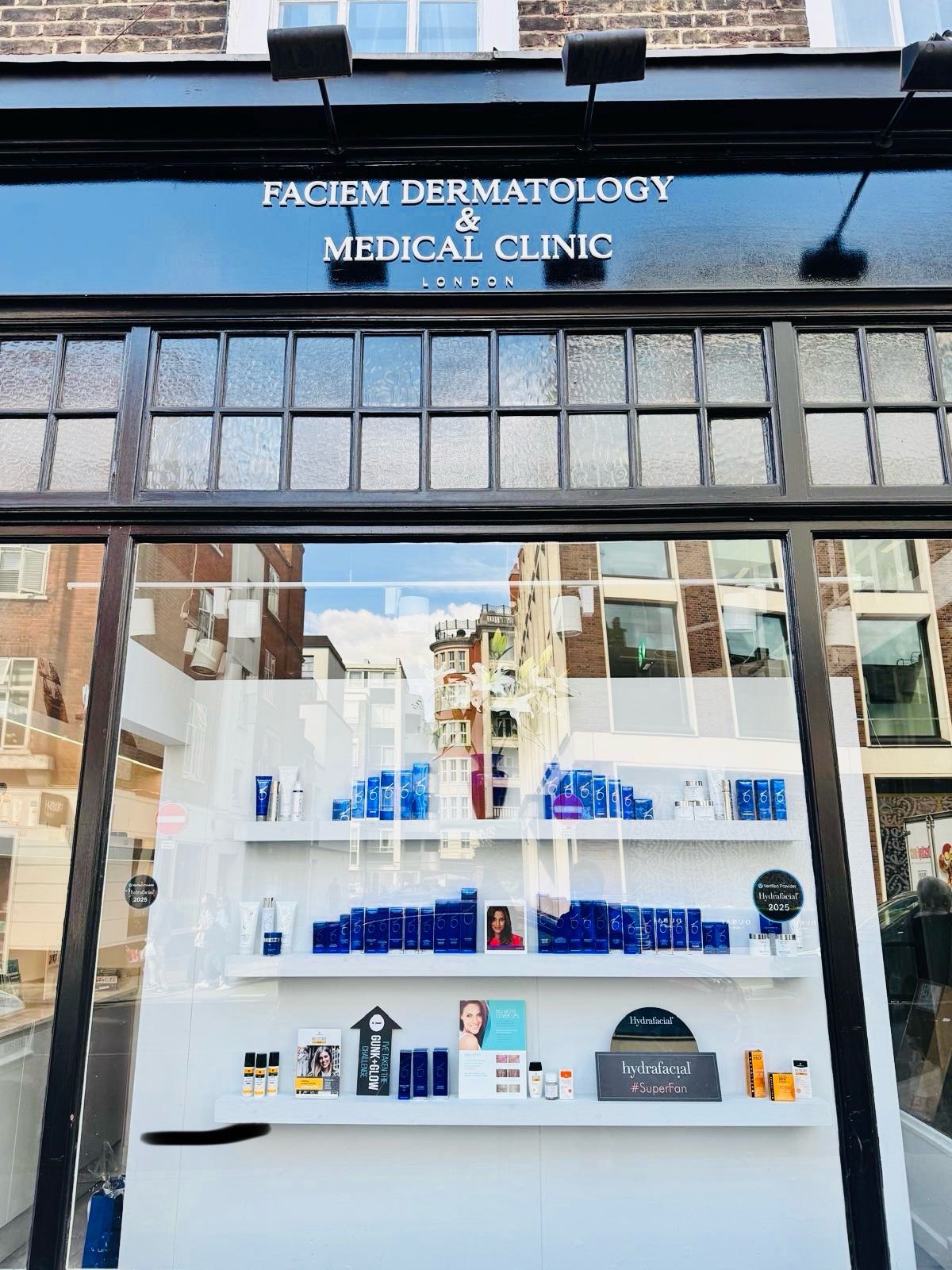
Step two is a stimulating 6% retinol creme, applied immediately after the solution, which works at a deeper level for collagen enhancement, firming and wrinkle reduction. Step three is a calming creme, used as a finishing product to settle the inflammation and irritation the first two steps can leave, and to restore moisture. You go home with written home-care instructions and a plan for restarting your skincare programme. The ZO 3 Step Peel is performed at Faciem Dermatology & Medical Clinic on Kensington Church St, London, by Dr Prasad.
Why your skin is prepared for months first
A TCA peel is preceded by one to three months on medical-grade skincare, the exact period depending on your skin. This is not an upsell; it is what makes the peel behave predictably. Priming the cells with bioactive products improves how the skin functions, so it reacts and heals better than untreated skin does.
Skin tone is graded on the Fitzpatrick scale at your consultation, because it changes how the peel is prepared for. Deeper tones, Fitzpatrick IV to VI, can be peeled, and are here regularly; what shifts is the length of the preparation and what goes into it, not whether the treatment is available. For Asian and Afro-Caribbean skin the preparation matters more still. Suppressing the pigment-producing cell beforehand is what reduces the risk of hyperpigmentation after the peel, and prescription products may be used alongside ZO Skin Health® skincare to do it. If you would prefer not to be on a skincare programme, a TCA peel is the wrong treatment, and Dr Prasad will tell you so at the consultation.
What the peeling week actually looks like
Plan the week around the peeling, not around the appointment. A 3 Step Peel is booked at a time away from work because there is approximately four to five days of peeling and about seven days of recovery. Most people take four to seven days off. Booking on a Thursday or Friday puts the peak of the peeling at the weekend, which in practice means taking the Friday and the Monday.
The skin feels tight and looks red before it flakes, and the flaking is obvious. Sunglasses and a quiet weekend do more for it than make-up. Results begin to show as early as two weeks, once the peeling is over, and the skin is described as glowing by about six weeks. Book the peel for a fortnight when you can afford to look as though your skin is recovering, because that is exactly how it will look.
The formulation, and why it is gentler than older TCAs
The peel used at Faciem comes from ZO Skin Health. Older TCA formulations tended to be very irritating and carried a higher risk of complications; this one is described as unique in calming and soothing the skin while it works. That is why it is delivered as a three-part system and not as an acid on its own — the retinol and calming steps are part of the treatment, not optional extras.
The procedure is described as suitable for all skin types, though whether it suits you personally is a judgement made after examining your skin, not a matter of category. The quoted price includes the peel and the cream you use for two to three days afterwards, so the aftercare is not a purchase you discover later.
Where a TCA peel sits among the other peels
A TCA peel is the level above the light glycolic peels. Those lighter treatments — the Hydrafacial® and the ZO Red Carpet Peel among them — brighten and smooth the skin, and for a good number of concerns that is enough. Where the pigmentation or scarring sits in the deeper layers, they generally do not achieve the correction, and that is the point at which a TCA peel is discussed.
Above the 3 Step Peel sits the ZO Controlled Depth Peel, recommended for deeper scars. If you want to see how the two TCA levels compare with the lighter treatments, our chemical peel depths compared page sets all of them out side by side.
Concerns, Depths & Steps
What Does a TCA Peel Treat?
A TCA peel is chosen for concerns sitting below the surface: hyperpigmentation including melasma, acne and acne scars, sun damage and age spots, and the loss of tone and firmness that comes with ageing skin. Because it takes off the epidermis, it works on several of those at the same time.
ZONE I
What it is chosen for
The concerns a TCA peel is used to correct.
Pigmentation, including melasma
Hyperpigmentation and melasma are among the main reasons a TCA peel is recommended. Melasma is stubborn and recurrent, so it is managed over time with skincare alongside the peel.
Acne and acne scars
Acne, and superficial to moderate acne scarring, may improve because the peel removes the epidermis. Deeper scars are where the Controlled Depth Peel is discussed instead.
Sun damage and age spots
Sun damage and age spots may be reduced or removed. Pigment that sits close to the surface responds most; older, deeper marks may need more than one peel.
Fine lines, tone and firmness
The retinol step stimulates collagen production, which is why firmer skin, softened fine lines and better overall tone and texture are listed among the results. Pore size may also reduce.
ZONE II
The two TCA depths
There are two levels, and the choice between them is made at consultation.
ZO 3 Step Peel
The first level, from £450, with about a week of recovery and most patients having one to two a year. This is the peel described throughout this page.
ZO Controlled Depth Peel
The deeper of the two, recommended where scarring sits further down than the 3 Step Peel reaches. It is raised at consultation only when the 3 Step Peel would fall short.
ZONE III
How the treatment runs
Preparation first, then three steps in a single appointment.
Preparation, one to three months
Medical-grade skincare beforehand brings your skin to an optimal state for the peel. How long it takes depends on the skin you start with.
Step one: the peel solution
The skin is cleaned, then cooled with a fan or cooler while a blend of 17% salicylic, 10% trichloroacetic and 5% lactic acids is applied.
Step two: 6% retinol creme
Applied immediately after the solution, this stimulates cellular function at a deep level for collagen enhancement, firming and wrinkle reduction.
Step three: calming creme
A finishing product that limits the inflammation and irritation the first two steps can cause, and restores moisture to the skin.
Choosing the Right Treatment
ZO 3 Step Peel vs Controlled Depth Peel: What’s the Difference?
Faciem uses two TCA depths, and choosing between them is the main decision at your consultation. The ZO 3 Step Peel is the first level and covers most pigmentation, sun damage and superficial to moderate scarring. The Controlled Depth Peel goes further down and is reserved for deeper scars.
| ZO 3 Step Peel | ZO Controlled Depth Peel | |
|---|---|---|
| How it works | A 17% salicylic, 10% TCA and 5% lactic acid solution, then a 6% retinol creme, then a calming creme. | A deeper TCA peel, used where the 3 Step Peel would not reach far enough. |
| Best for | Pigmentation and melasma, acne, sun damage, and superficial to moderate scarring. | Deeper scarring. |
| Results appear | As early as two weeks, glowing by around six weeks. | Discussed at consultation |
| How often | Most patients have one to two a year. | Discussed at consultation |
| Downtime | Up to a week: four to five days of peeling, around seven days of recovery. | Discussed at consultation |
| Ideal candidate | Someone with deeper pigmentation or moderate scarring who can prepare the skin and take a week. | Someone whose scarring has already been judged too deep for the 3 Step Peel. |
Results vary between individuals, and a deeper peel is not automatically a better one. Dr Prasad recommends the shallower option where it will do the job, and says so directly when neither TCA depth is the right treatment for your skin.
Transparent Pricing
How Much Does a TCA Peel Cost at Faciem?
A TCA peel at Faciem starts from £450, and that price includes the peel treatment and the cream you use for two to three days afterwards. Both depths start from that figure — the ZO 3 Step Peel and the deeper Controlled Depth Peel — and which of them your skin needs is settled at your consultation. Because most patients have one to two peels a year, the sensible way to look at the cost is annually. The skincare programme that prepares your skin is a separate charge, and what it comes to for you is set out before you commit to the peel.
The word “TCA” covers a wide range of prices in London because it covers a wide range of treatments. The concentration used, the number of layers applied, whether the months of preparation are included and who holds the applicator all change what you are actually buying. A low headline figure usually signals a lighter peel than the one being described, or aftercare sold on afterwards.
Two questions save money later: what happens if your skin needs a second peel, and how the preparation period is costed. Photographs taken at your review are the honest measure of whether the peel earned its place.
| Treatment | Price |
|---|---|
| ZO 3 Step Peel, including the post-peel cream | From £450 |
| Repeat 3 Step Peel — most patients have one to two a year | From £450 each |
| ZO Controlled Depth Peel, the deeper of the two levels | Quoted at consultation |
| Consultation with Dr Prasad | Quoted before booking |
Why Faciem
Why Have a TCA Peel Here?
A TCA peel removes the outer layer of your skin, so the margin for judgement is narrow. Here the peel is performed by Dr Prasad, a GMC-registered doctor with 20 years’ experience, and only once your skin has been prepared and you have had time to consider it.
- Depth chosen by Dr Prasad after a face-to-face examination of your skin
- One to three months of medical-grade skin preparation before the peel
- Written information and thinking time before you commit to anything
- Pigment-suppressing preparation for Asian and Afro-Caribbean skin
- The peel timed to your working week so the peeling peaks at the weekend
- The post-peel cream included in the price, not sold on afterwards
Experience & Expertise
Why Experience Decides How Deep a Peel Can Go
The stronger the peel, the more it depends on the person applying it. A TCA solution removes the epidermis, and the judgements about how much to apply, how the skin is reacting and when to stop are made in the moment, on the day, on your face. The more experienced the practitioner, the deeper the peel they can reasonably work with.
Dr Prasad has 20 years’ experience across the peel range including the deepest, and a particular focus on skin of colour, where pigmentation after a peel is the main risk to plan for. She will recommend a lighter peel, or no peel at all, when that is the better answer for your skin. Her training and clinical background are set out on her clinic profile.
- Dr Anamica Prasad — MBChB (1999), Dip Dermatology (2001), MRCGP, DFFP, DRCOG · a GMC-registered doctor
- Member of the Joint Council for Cosmetic Practitioners (JCCP), British Medical Laser Association (BMLA), Royal Society of Medicine and the Aesthetic Complications Group · ZO Skin Health UK Faculty & Trainer
- Clinic operated by Derma Medical UK Ltd — registered with the Care Quality Commission (CQC) for diagnostic and screening procedures, surgical procedures, and treatment of disease, disorder or injury (Location ID 1-25573003746)
- TCA peels performed only after a face-to-face medical consultation and a period of skin preparation
- 20 years’ experience in dermatology and aesthetics, including deeper peels on skin of colour

Patient Reviews
Rated Excellent by Patients on Google
Your Journey, Our Promise
How a TCA Peel Is Planned and Performed
A TCA peel runs over months, not over one visit. The depth is decided after a detailed consultation with Dr Prasad, your skin is prepared for one to three months, and the peel itself is placed in your diary at a point where a week of peeling will not matter.
STEP 01
Consultation
Dr Prasad examines your skin and works out whether a TCA peel will change what you have come in about, and if so at which depth. You leave with written information and time to consider it, as with every treatment at the clinic.
STEP 02
Preparation
You start on medical-grade skincare for one to three months, the length depending on your skin. This primes the cells so the peel behaves as intended, and on Asian and Afro-Caribbean skin it suppresses pigment production before any acid is applied.
STEP 03
Treatment
The appointment runs 45–60 minutes and covers all three steps: the peel solution while the skin is cooled, the 6% retinol creme, then the calming creme. A Thursday or Friday slot is usually recommended.
STEP 04
Aftercare & review
You go home with detailed home-care instructions and the cream to use for the first two to three days, plus a date for restarting your skincare programme. A review appointment lets Dr Prasad judge how the skin responded, and when it falls is agreed with you when the peel is booked.
Side Effects & Safety
What Are the Risks and Side Effects of a TCA Peel?
A TCA peel removes the outer layer of the skin deliberately, so peeling, redness and tightness are the expected course and not complications. Three things decide how straightforward that week is: the depth chosen for your skin type, the months of preparation behind it, and how closely you follow the aftercare you are given.
Common, temporary effects
- Four to five days of visible peeling and flaking
- Redness and tightness while the skin recovers, over about seven days
- Temporary sensitivity, with the new skin reacting more than usual
- Heightened sensitivity to sunlight while the skin settles
Uncommon effects
- Less often, the redness outlasts the week, the skin becomes irritated, or pigment changes appear once the peeling is over — the last of those being why Asian and Afro-Caribbean skin is prepared with pigment-suppressing products first. Infection, a cold sore flare and, rarely, scarring can also happen. Ring the clinic as soon as something looks wrong; most of these settle when they are managed early.
Who a TCA peel is not for
- A TCA peel is wrong for anyone who cannot take the recovery week, or who would prefer not to be on a skincare programme first. Active skin infection, broken skin, recent isotretinoin, a history of keloid scarring, pregnancy and breastfeeding are all reasons to delay or reconsider. Where a lighter peel would achieve the same result, that is what Dr Prasad will recommend.
Aftercare
Getting Through the Peeling Week
Aftercare is mostly a matter of leaving the skin alone, and the week has a shape worth knowing in advance. Days one and two are tight, red and warm rather than flaky. Peeling runs roughly four to five days from around day two, heaviest in the middle. By about day seven the skin has settled. Results show from around two weeks, and the glow at about six. You go home with written instructions, the cream for the first two to three days, and a restart date for your skincare.
Do
- Book the peel for a Thursday or Friday so the four to five days of peeling fall over a weekend
- Use the calming cream provided for the first two to three days after the peel
- Restart your ZO Skin Health programme on the date in your instructions, usually once peeling has finished at around day seven
- Apply SPF 50 every morning for at least three months afterwards, because new skin burns and pigments easily
- Keep the routine to gentle cleansing and the creams you were given for the first seven days
Avoid
- Picking or pulling the flakes — let them come away on their own across the four to five days
- Booking a wedding, holiday or photographed event within two weeks of the peel
- Saunas, steam rooms, swimming and heavy exercise for seven days, until the peeling has finished
- Acids, scrubs and retinoids that are not in your written plan for the first two weeks
- Waxing, threading and other hair removal on treated skin for at least two weeks
Treat the above as general guidance. The written instructions you are handed on the day are the ones to follow, because they account for your skin and how it behaved during the appointment.
TCA Peel FAQs
Your Questions, Answered
Cost, recovery, skin type and what actually goes on the skin — the things people want settled before they book a TCA peel. Anything left over belongs on the list you bring to your consultation.
How much does a TCA peel cost in London?
A TCA peel at Faciem starts from £450, and that price includes the peel treatment and the cream used for two to three days afterwards. The medical-grade skincare that prepares your skin beforehand is charged separately. Your total is set out in writing at consultation, before anything is booked.
What is in a ZO 3 Step Peel?
The ZO 3 Step Peel solution is a blend of 17% salicylic, 10% trichloroacetic and 5% lactic acids, with ingredients added to limit inflammation and hydrate the skin. It is followed by a 6% retinol creme and then a calming creme. Both of those are steps in the treatment, not aftercare products you take home.
Can I wear make-up after a TCA peel?
Plan to go without make-up for about a week after a TCA peel. It sits badly on flaking skin, and rubbing it on and off disturbs peeling that is meant to happen on its own, so keep the face bare through the four to five days of peeling and the two to three days of calming cream. Most people are back in their usual make-up by around day seven to ten, once the skin has settled. Mineral make-up over SPF is the gentlest way to start.
How much time off work do I need after a TCA peel?
Plan for four to seven days off after a TCA peel. There is approximately four to five days of peeling and about seven days of recovery, which is why the peel is scheduled at a time away from work. Having it on a Thursday or Friday means most people take the Friday and the Monday.
Does a TCA peel hurt?
Most people describe a TCA peel as warm and stinging rather than sore, over 45–60 minutes. No injected anaesthetic is used; the comfort measure is a fan or cooler run over the skin while the solution is applied. The sensation builds while the peel works and eases once the calming creme goes on. Older TCA formulations were considerably more irritating than the one used here. Say so during the appointment if it feels stronger than you were expecting.
When will I see results from a TCA peel?
Results from a TCA peel can appear as early as two weeks, once the peeling has finished, and the skin is described as glowing by around six weeks. The retinol step keeps working on collagen after the appointment, so firmness and tone tend to improve later than surface brightness does. Results vary between individuals.
How often can you have a TCA peel?
Most patients have one to two TCA peels a year. How many you need depends on the concern and how your skin responded to the last one, so the gap between peels is set at your review appointment. Dr Prasad will also say when your skin has had enough resurfacing for the time being.
Why do I have to buy skincare before a TCA peel?
Because unprepared skin does not react or heal as well. Medical-grade and prescription products are more clinically active than most, and priming the cells with them improves how the skin functions before any acid is applied. On Asian and Afro-Caribbean skin it is also how the pigment-producing cells are suppressed, which lowers the risk of hyperpigmentation after the peel.
Is a TCA peel suitable for darker skin tones?
Yes, with preparation. Skin tone is graded on the Fitzpatrick scale before a TCA peel is planned, and deeper tones, Fitzpatrick IV to VI, are treated here regularly. What changes is the preparation rather than the peel: on Asian and Afro-Caribbean skin, suppressing the pigment-producing cell for one to three months beforehand is treated as essential, because the risk being managed is post-inflammatory hyperpigmentation after the peel. Your own suitability is settled once Dr Prasad has examined your skin face to face.
Can a TCA peel treat melasma?
Hyperpigmentation including melasma is one of the concerns a TCA peel is recommended for, particularly where the pigment sits deeper than a light glycolic peel reaches. Melasma tends to return, so it is managed with skincare alongside treatment instead of being settled in one appointment. Our guide to melasma explains why it behaves that way.
What is the difference between the ZO 3 Step Peel and the Controlled Depth Peel?
They are the two TCA levels used at the clinic. The ZO 3 Step Peel is the first level and covers pigmentation, sun damage and superficial to moderate scarring. The Controlled Depth Peel goes deeper and is recommended for deeper scars. Which level applies to you is decided after Dr Prasad has examined your skin.
When can I exercise again after a TCA peel?
Leave heavy exercise for about seven days after a TCA peel, until the peeling has finished and the skin no longer feels tight. Sweat, heat and friction all irritate skin that is actively shedding, and chlorinated pools, saunas, steam rooms and hot yoga studios are harder on it still. Gentle walking is fine from the day after the peel. Build back up once your skin has settled, and keep SPF 50 on for anything outdoors.
TCA Peels in Kensington, London
A Doctor-Led Clinic in the Heart of Kensington
The clinic sits on Kensington Church St, between two Underground stations — a few minutes on foot from High Street Kensington and roughly ten from Notting Hill Gate. The Kensington council underground car park is close by, which is useful on peel day if you would rather drive. Patients come in from Notting Hill, Holland Park, Chelsea and South Kensington, and from across central and west London.
A TCA peel is not a lunchtime appointment. It runs 45–60 minutes, and the week that follows is one you will want to spend out of the office. The clinic is open Monday to Saturday, 10am–7pm, so the recommended Thursday or Friday slot is straightforward to arrange, and the shorter preparation and review appointments fit around a working day.
Before booking a TCA peel anywhere, ask four things: which peel it is by name and concentration, whether the person applying it is registered with the GMC, NMC or GDC, whether a face-to-face consultation and a preparation period come first, and what the written price covers once aftercare is counted.
Coming in for an assessment does not commit you to a peel. Where a lighter peel would achieve as much, or where skincare on its own is the sensible next step for now, Dr Prasad says so at the consultation and not after you have paid for a course.
Plan Your Visit
- Faciem Dermatology & Medical Clinic
- Phone: +44 20 7131 3539
- 7 Kensington Church St, London W8 4LF, United Kingdom
- Tube: High Street Kensington (few minutes’ walk) · Notting Hill Gate (~10 minutes)
- Parking: Kensington council underground car park nearby
- Open Monday–Saturday, 10am–7pm · Sunday closed
- Consultations bookable online; the peel is scheduled after skin preparation
- Consultation-first — no treatment without medical assessment
- Serving Kensington, Chelsea, Notting Hill & Central London
Continue Exploring
Related Treatments & Reading
All Aesthetic Treatments
Explore the full range of doctor-led skin and aesthetic treatments available at Faciem, from injectables to medical-grade skincare.
Skin Health Blog
Expert articles from the Faciem team on skin ageing, treatment advice and how to get the best from your skincare.
Faciem Dermatology & Medical Clinic · Kensington
See Whether the ZO 3 Step Peel Fits Your Skin and Your Diary
A consultation with Dr Prasad settles three things: whether a TCA peel is right for your skin, which of the two depths it should be, and when the preparation and the peeling week can realistically happen. If you would like to hear from people treated here first, read our patient reviews.
Prefer to talk? +44 20 7131 3539