 Skip to content
Medical Acne Treatment · Kensington, London
Home / Acne Treatment
Doctor-Led Acne Treatment in London for Calmer, Clearer Skin
Acne treatment at Faciem is a planned medical programme, not a facial. Dr Prasad establishes what is driving your acne — sticky pores, surplus oil, inflammation, a hormonal component, or several at once — then works against that cause with medical-grade skincare, prescription treatment and in-clinic sessions. Appointments run 45–60 minutes, three to six sessions are usually required, and prices start from £25 with a therapist or £150 with Dr Prasad.
Acne itself is an inflammatory disorder of the pore, hair follicle and oil gland: a medical condition, not a hygiene problem, and one that keeps changing the skin while it is left to run. Because prescription medicines are so often part of the answer, treatment here opens with a face-to-face consultation and a skin examination at our Kensington clinic, and suitability is judged individually.
- Doctor-led assessment
- Every skin tone
- Cause treated, not covered
- Kensington clinic

96%
Patient satisfaction
- Medically reviewed by Dr Prasad
This page sets out how acne is assessed, prescribed for and treated at our Kensington clinic, and is checked for clinical accuracy.
Last reviewed: 15 September 2026.
Patient information only. Prescription acne treatment follows a face-to-face medical consultation with Dr Prasad.
Patients since 2019
Procedures
Satisfaction
TL;DR
Medical acne treatment is available at Faciem Dermatology & Medical Clinic on Kensington Church St, London, led by Dr Prasad, a GMC-registered doctor with 20 years’ experience. It runs as a programme: assessment first, then medical-grade skincare or prescription treatment, supported by in-clinic sessions such as HydraFacial and micro-pulse laser light. Appointments last 45–60 minutes, three to six sessions are usually required, and prices start from £25 with a therapist or £150 with Dr Prasad. Improvement can begin at around two weeks, with good results usually shown within four to six weeks and held with the right ongoing programme.
- A course with a plan, not a one-off facial
- Skincare, prescriptions and clinic sessions in one programme
- Dark marks and scarring risk handled alongside the spots
Treatment at a Glance
Your Acne Treatment Overview
Procedure time
45–60 minutes
Per in-clinic session.
Price
From £25*
£25 with a therapist, £150 with Dr Prasad.
Results visible
From about two weeks
Good results usually shown within four to six weeks.
Results last
Held with an ongoing programme
Maintenance is agreed at your review appointment.
Downtime
Some peeling and dryness
Comes from the active products and treatments used.
Back to work
Same day
Most people carry on with the rest of their day after a session.
*What you pay depends on who treats you and what your programme includes; the full cost is confirmed in writing before anything begins. Three to six sessions are usually required, and the spacing between them is agreed when your plan is drawn up. Prescription acne treatment is issued only after a face-to-face medical consultation with Dr Prasad and a review of your medical history.
About the Treatment
What Is Acne Treatment and What Does It Involve?
What acne actually is, why it behaves the way it does, and what each part of a treatment programme is designed to change.

Acne treatment is the medical management of a localised inflammatory disorder of the pilosebaceous unit — the pore, hair follicle and oil gland working as one. It clears the blockage in the follicle, moderates oil production and settles the inflammation, using medical-grade skincare, prescription treatment and in-clinic sessions chosen once a doctor has examined the skin.
How acne forms, and what treatment targets
Acne forms where the pore, the hair follicle and the sebaceous gland meet. In acne-prone skin the lining of the pore is sticky, so dead cells are not shed cleanly; add surplus oil and the follicle blocks, first as a whitehead or blackhead, then as a red, sore spot, sometimes with a yellow head. Inflammation is the part that does lasting harm. Over time it thickens the skin and can damage collagen, which is how scarring begins.
Acne treatment works on each of those steps, not on the spot you can see. Medical and bioactive ingredients break down the blockage and keep the oil glands in check, while in-clinic sessions lift congestion and calm the inflammatory response. Because oily skin and enlarged pores usually travel with acne, both are assessed at the same appointment.
Why acne is assessed by a doctor first
Acne looks straightforward and seldom is. Spots on the surface may be driven by hormones, by impaired shedding of dead skin cells, by the inflammatory response itself, or by a skincare regime that is quietly making things worse. Treating all four the same way is why so many people arrive having tried product after product with no lasting change.
At Faciem the assessment comes first. Dr Prasad examines the skin, takes a full history, and decides whether your plan needs prescription treatment, medical-grade skincare, in-clinic sessions or some combination of the three. She will also tell you when acne is not what is happening: rosacea is regularly mistaken for it and then treated with products that inflame it further.
What an acne treatment session feels like
An in-clinic acne appointment runs 45–60 minutes. The skin is cleansed and reviewed, then treated to the plan agreed at your consultation — that may mean a HydraFacial to lift congestion, or micro-pulse laser light aimed at the follicle and the oil gland.
Most people find the session comfortable and describe warmth or a mild tingle instead of pain. You can go straight back to work afterwards. The days that follow are more noticeable than the appointment itself: as the active products and treatments take hold, skin commonly peels and feels dry. That settles, and we flag it in advance so it does not come as a surprise. Sessions are spaced to give the skin time to respond in between, and each appointment is adjusted according to how the last one went.
What your acne programme may include
An acne programme is built from four elements, combined in whatever way the assessment supports. Medical-grade skin products deliver active ingredients at concentrations high-street ranges do not reach; our medical skincare and ZO Skin Health pages set out what that means in practice. Prescription treatment is used where the acne warrants it, and follows a face-to-face consultation.
Alongside those, HydraFacial and light devices such as a micro-pulse laser have been shown to reduce the hair follicle and shrink the oil glands. Three to six sessions are usually required, and the cost of the whole programme is set out at the start, in writing. Which elements your plan leans on is decided by what the examination found: for some people the products do most of the work and the clinic sessions support them, and for others the balance runs the other way.
Dark marks, scarring and skin of colour
Acne leaves more behind than spots. The same inflammation stimulates melanocytes, the cells that produce brown pigment, which leaves dark marks on skin of colour — Indian and Afro-Caribbean skin in particular. Those marks often distress people more than the original breakout, and they are a strong argument for treating acne early.
Skin tone is graded on the Fitzpatrick scale, I to VI, before the light-based part of an acne programme is set up. Deeper skin tones, Fitzpatrick IV to VI, can be treated, but the settings are adjusted — lower energy, wider spacing between sessions — and a patch test carries more weight, because the risk being managed is post-inflammatory pigmentation rather than the acne itself. The same grading guides how strong the active products in your regime start out and how quickly they are built up, since actives introduced too fast can inflame skin of colour into the very marks you came to have treated.
Collagen damage from prolonged inflammation is the other consequence, and it is what leads to acne scarring. Active acne and the pigmentation it leaves behind are assessed together, because settling the inflammation is what limits both. Sun protection matters here more than most people expect: ultraviolet exposure darkens existing marks and slows their fading. How completely marks fade differs from one person to the next, and what your skin needs is decided once Dr Prasad has examined it in person.
What Acne Treatment Addresses
Where Acne Appears and What a Programme Covers
Acne is not confined to the face, and it does not present the same way in everyone. Treatment is grouped here by where the acne is, what it has left behind, and which elements a programme may draw on. Suitability for each is confirmed once Dr Prasad has assessed your skin.
ZONE I
Where Acne Appears
The sites acne treatment at Faciem addresses, each examined before a plan is agreed.
Acne on the Face
The most commonly treated pattern, across the forehead, cheeks, chin and jawline. Where the spots cluster often points towards what is driving them, so distribution forms part of the assessment.
Acne on the Back, Chest and Body
Body acne is treated alongside facial acne. It is frequently more stubborn and covers a larger area, so the plan usually differs from the one used on the face.
Oily, Congested Skin
Surplus oil combined with a sticky pore lining is what starts the blockage. Moderating oil production is often the first thing an acne programme addresses.
Hormonal Acne
Where a hormonal component is contributing, it needs addressing directly. That is established by history and examination, never assumed from the pattern of spots alone.
ZONE II
What Acne Leaves Behind
The consequences of prolonged inflammation, assessed alongside the active acne.
Dark Marks After Spots
Inflammation stimulates the pigment-producing cells, leaving dark marks that are more visible and more persistent in skin of colour. Calming the acne is what limits them.
Acne Scarring
Sustained inflammation thickens the skin and can damage collagen, which may lead to scarring. Scars that have already formed are a separate treatment question from active acne.
ZONE III
What a Programme May Include
The elements an acne plan is built from, combined according to what the assessment supports.
Medical-Grade Skincare
Medical and bioactive ingredients that break down blockages and keep oil glands in check. For many people these are the backbone of the plan, not an optional extra.
Prescription Treatment
Where the acne warrants it, prescription treatment forms part of the programme. It follows a face-to-face consultation with Dr Prasad and a review of your medical history.
HydraFacial
A clinic-grade facial used inside an acne programme to address congestion. Paired with the right products, it supports the rest of the plan.
Micro-Pulse Laser Light
Light devices such as a micro-pulse laser have been shown to reduce the hair follicle and shrink the oil glands. Suitability is confirmed at your consultation.
Choosing the Right Treatment
Acne Treatment vs Acne Scar Treatment: What’s the Difference?
These two are regularly confused, and treating one when you need the other costs months. Acne treatment works on the active disorder: the blocked follicle, the oil gland and the inflammation. Scar treatment works on the texture left behind once the acne has settled, which is a question of collagen, not congestion. Most people need the first before the second is worth considering, and your consultation confirms which stage your skin is at.
| Active Acne Treatment | Acne Scar Treatment | |
|---|---|---|
| How it works | Clears the blockage in the follicle, moderates oil production and reduces inflammation, using skincare, prescription treatment and in-clinic sessions | Works on the texture and collagen change left after the inflammation has resolved, not on the acne process itself |
| Best for | Whiteheads, blackheads, red sore spots, oily congested skin and hormonal breakouts on the face, back, chest or body | Indented or raised marks that remain once spots have stopped forming, assessed on our acne scarring page |
| Results appear | From about two weeks, with good results usually shown by four to six weeks | Gradually, over a longer horizon than active acne treatment, as the skin remodels |
| Results last | Held with the right ongoing programme | Textural change tends to be lasting, though the degree of improvement differs between people |
| Downtime | Some peeling and dryness from the products and treatments used; back at work the same day | Depends entirely on the approach chosen, and is discussed before anything is agreed |
| Ideal candidate | Anyone with spots still forming, or with oiliness and congestion that keep returning | Someone whose acne is controlled and who is now troubled by the marks it left |
Both are medical treatments, and how much either achieves differs from person to person. Dr Prasad will tell you which of the two your skin is ready for, including when the sensible order is to settle the acne first and look at the scarring afterwards.
Acne Treatment Prices London
How Much Does Acne Treatment Cost at Faciem?
Acne treatment at Faciem starts from £25 with a therapist, and £150 with Dr Prasad. The difference reflects who assesses and treats you, not a difference in the standard of care, and the right pathway for you is explained when you book. What you pay across the course depends on the number of sessions your skin needs — three to six are usually required — and on whether your plan includes prescription treatment or medical-grade products alongside the in-clinic sessions.
A word of candid advice on comparing acne treatment prices in London. Acne is managed over months, not in one appointment, so the figure that matters is the cost of a whole programme, not the headline price of a single session. A clinic that cannot tell you how many sessions it expects, what products are included and who will actually treat you is not giving you enough to compare. Ask all three before you commit anywhere.
Your pricing and the shape of your treatment plan are set out clearly at the outset, in writing, before anything goes ahead. There is no obligation to proceed after a consultation, and if you would prefer to talk it through first you can contact the clinic directly.
| Treatment | Price |
|---|---|
| Acne treatment with Dr Prasad | £150 |
| Course of three to six sessions | Priced as a programme |
| Acne treatment with a therapist | From £25 |
| Consultation | Confirmed when you book |
Benefits of Acne Treatment at Faciem
Why Patients Choose Faciem for Acne Treatment in London
Most people who come to us about acne have already tried several things. What usually changes the outcome is not another product but a correct reading of what is driving the acne, and a plan given long enough to work.
- The cause established first — blockage, oil, inflammation or hormones
- Assessed and planned by Dr Prasad, a GMC-registered doctor
- Skincare, prescriptions and in-clinic sessions combined in one plan
- Dark marks in skin of colour recognised and treated, not overlooked
- Clear, transparent pricing and treatment plan from the outset
- One Kensington clinic for assessment, prescribing and sessions, open six days a week
Experience & Expertise
Acne Assessed by a Doctor, Not Guessed At
Acne is a medical condition, and the part that decides the outcome happens before anything touches the skin. Is the driver hormonal? Is the shedding of dead cells impaired? Is the current regime aggravating things? Is what looks like acne in fact something else? Those questions need an examination and a history, not a product matched to a photograph. Getting them wrong costs months, and in inflamed skin it costs pigment and collagen too.
At Faciem, your acne is assessed and your programme planned by Dr Prasad, a GMC-registered doctor with 20 years’ experience in dermatology, who treats inflammatory skin disease across every skin tone. Where prescription treatment is appropriate she prescribes it herself after a face-to-face consultation; where it is not, she says so. You will also be told when the acne is settled enough that the remaining concern is scarring, which is a different conversation and a different treatment.
- Dr Anamica Prasad — MBChB (1999), Dip Dermatology (2001), MRCGP, DFFP, DRCOG · a GMC-registered doctor
- Member of the Joint Council for Cosmetic Practitioners (JCCP), British Medical Laser Association (BMLA), Royal Society of Medicine and the Aesthetic Complications Group · ZO Skin Health UK Faculty & Trainer
- Clinic operated by Derma Medical UK Ltd — registered with the Care Quality Commission (CQC) for diagnostic and screening procedures, surgical procedures, and treatment of disease, disorder or injury (Location ID 1-25573003746)
- Face-to-face medical consultation and skin examination before any treatment is prescribed
- 20 years’ experience in dermatology, treating acne and its consequences across every skin tone

Patient Reviews
Rated Excellent by Patients on Google
Your Journey, Our Promise
What to Expect From Your Acne Programme
Acne is treated over a course, not in a single visit, so it helps to know the shape of it before you start. Three to six sessions are usually required, with the plan reviewed as your skin responds.
STEP 01
Consultation
Your first appointment is an examination, not a treatment. Dr Prasad or our therapist looks at the pattern and severity of your acne, takes a history and identifies the likely drivers. If a course of treatment is not the right starting point for your skin, you will be told so.
STEP 02
Personalised Plan
You leave with a written plan: the medical-grade products or prescriptions you start on, the in-clinic sessions recommended, how many appointments to expect, and what the programme costs from beginning to end.
STEP 03
Treatment
Each session takes 45–60 minutes and may pair a HydraFacial with light devices such as a micro-pulse laser. Most people carry on with their day straight afterwards, and the change comes gradually across the course.
STEP 04
Aftercare & Review
Aftercare guidance covers the products in your plan and how to handle the drier weeks. Improvement can begin at around two weeks, with good results usually shown by four to six. Reviews adjust the programme as your skin responds; the timing and cost of yours are agreed at your appointment.
Side Effects & Safety
Is Acne Treatment Safe? An Honest Answer
Acne treatment is generally well tolerated, but it is active treatment and the skin reacts while it adjusts. How safe it is turns on the assessment behind it: the right actives at the right strength for your skin, and prescription treatment given only where your medical history supports it. Here is what to expect, and what to watch for.
Common, temporary effects
- Peeling and dryness while the skin adjusts to active products and treatments
- Mild redness or tightness for a short period after an in-clinic session
- Greater sensitivity to sunlight, which is why daily sun protection forms part of every acne plan
- A settling-in period where the skin can look busier before it calms, discussed in advance
Uncommon effects
- Less commonly, active ingredients irritate the skin enough that the regime needs pausing, reducing in strength or changing. That is a reason to be reviewed, not a reason to stop treatment on your own. Prescription acne treatments carry their own considerations, and those are explained to you individually before anything is prescribed. Tell the clinic about anything unexpected instead of working through it alone.
Who acne treatment is not for
- Some prescription acne treatments are not suitable during pregnancy or breastfeeding, and certain in-clinic treatments are not appropriate where there is an active skin infection or a recent course of particular medicines. Dr Prasad reviews your medical history and decides suitability case by case; if a treatment should not go ahead for you, she will say so and explain why.
Acne Treatment Aftercare
Looking After Your Skin Between Acne Sessions
Aftercare counts for more in acne than in most treatments, because the programme continues at home between appointments. The arc is fairly consistent: warmth or tightness for the first 24 hours after a session, peeling and dryness across roughly days three to seven as the actives take hold, first visible improvement at around two weeks, and the clearest change by four to six weeks. You will be given guidance specific to your own regime; these are the general principles.
Do
- Use your prescribed products every day for the first four weeks at least, including on the days your skin looks settled
- Apply a broad-spectrum SPF 50 every morning and top it up every two hours outdoors, as active ingredients raise sun sensitivity
- Moisturise twice a day with a simple, non-comedogenic cream while the peeling and dryness last, usually days three to seven after a session
- Give the programme its full course — three to six sessions — before judging it, since improvement often begins at around two weeks
- Tell the clinic within 24 hours if the skin becomes sore, swollen or unusually irritated, so the regime can be adjusted
Avoid
- Picking, squeezing or extracting spots yourself, which drives pigment change and scarring
- Saunas, steam rooms, hot yoga and heavy training for 24 to 48 hours after an in-clinic session
- Scrubs, harsh exfoliants and astringent toners throughout the course, and for at least 48 hours after each session in particular
- Adding a new active product from elsewhere on top of your plan; check with the clinic first
- Stopping the regime once the skin clears at four to six weeks, which is when acne most often returns
This is general guidance and does not replace the aftercare advice written for your own regime. Peeling and dryness while active products take effect are expected, not a sign that something has gone wrong.
Acne Treatment FAQs
Your Questions, Answered
Cost, timings, session numbers, suitability and what happens to the marks acne leaves behind — the questions acne patients put to us before starting. Bring any others to your consultation.
How much does acne treatment cost in London?
At Faciem, acne treatment starts from £25 with a therapist and £150 with Dr Prasad. Because acne is managed as a programme, the more useful figure is the cost across three to six sessions together with any products or prescriptions your plan includes. All of it is set out in writing before treatment begins.
How long does acne treatment take to work?
Acne treatment can start to show improvement at around two weeks, with good results usually shown within four to six weeks and held with the right ongoing programme. Change arrives gradually across the course, not all at once after one session. Individual response varies with the type of acne and how long it has been present.
How many acne treatment sessions will I need?
Three to six sessions are usually required. The exact number depends on what is driving your acne, how severe it is and how your skin responds along the way. The expected course, including how far apart your sessions fall, is agreed before you start, so the programme does not grow appointment by appointment.
Does acne treatment hurt?
In-clinic acne sessions are generally well tolerated, and most people describe warmth or a mild tingle instead of pain. Sessions run 45–60 minutes. More noticeable are the days afterwards, when peeling and dryness are common while the skin adjusts to active treatment; that is expected and it settles.
Who is acne treatment suitable for?
Acne treatment suits adults and teenagers with active acne on the face, back, chest or body, including hormonal and persistent adult acne. Some prescription treatments are not appropriate in pregnancy or breastfeeding, or alongside certain conditions and medicines. Dr Prasad assesses this at a face-to-face consultation and will say if a different approach would serve you better.
Can I wear make-up after an acne treatment session?
Leave the skin bare for the rest of the day after an in-clinic acne session, then go back to make-up the next morning, roughly 12 to 24 hours later. Choose non-comedogenic mineral or oil-free formulas and apply them with clean hands or freshly washed brushes, because heavy, occlusive foundation on congested skin works against the treatment. Remove it gently each night before your prescribed products go on. Our acne condition page covers the patterns behind the breakouts.
How soon can I go back to work or exercise after acne treatment?
Work is same day. An acne session leaves no bruising and no dressing, so most people return to the office or to their day straight from the appointment. Exercise is the part to delay: allow 24 to 48 hours before saunas, steam rooms, hot yoga or heavy training, since heat and sweat on freshly treated skin can aggravate it. If you have an event, leave a week or two, as peeling is likeliest around days three to seven.
Can men have acne treatment?
Yes. Acne treatment is planned around the individual, and men and women are treated alike. Beard-area breakouts and ingrowing hairs can look similar and sometimes occur together, so telling them apart is part of the consultation before a plan is agreed.
Will acne treatment help my acne scars?
Treating active acne limits further scarring, because it is the sustained inflammation that damages collagen. It does not address scars that have already formed, which is a separate question covered on our acne scarring page. In most cases the acne is settled first and the scarring assessed afterwards.
Will my acne come back after treatment?
Acne is managed, not switched off, and results are held with the right ongoing programme. Stopping treatment as soon as the skin clears is the most common reason acne returns. What maintenance looks like for you, and how long your results are likely to hold once a course finishes, is discussed at your review.
Can acne on the back and chest be treated?
Yes. Acne on the back, chest and body is treated alongside facial acne. Body acne is often more persistent and the areas involved are larger, so the plan and the number of sessions may differ from a facial programme. Suitability is confirmed once Dr Prasad has examined the affected skin.
Do I need a prescription for acne treatment?
Not always. Some acne programmes are built around medical-grade skin products, while others include prescription treatment where the acne warrants it. Anything prescribed follows a face-to-face medical consultation with Dr Prasad and a review of your medical history, as prescribing rules require.
Acne Treatment in Kensington, London
A Doctor-Led Clinic in the Heart of Kensington
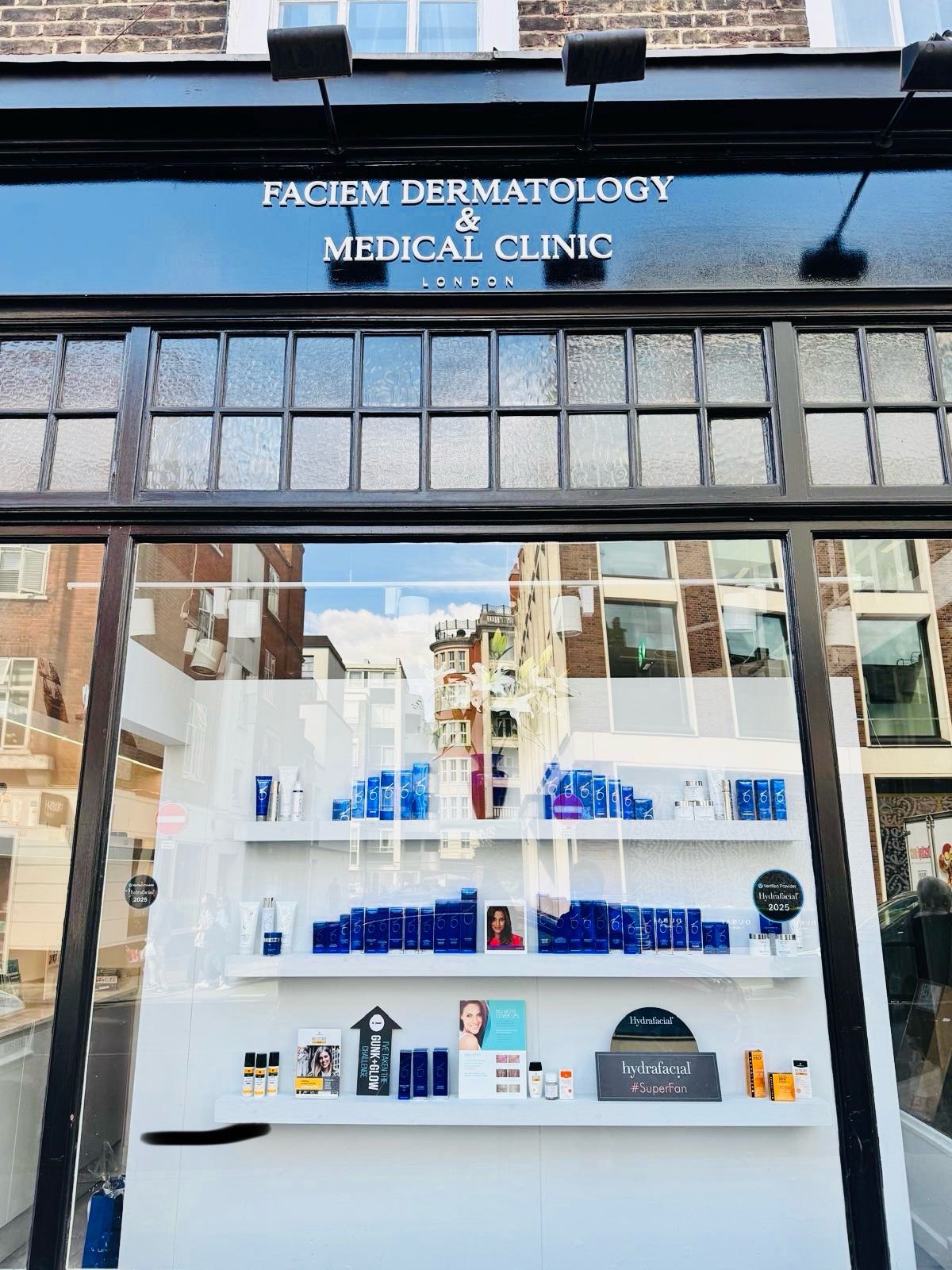
Our acne clinic sits on Kensington Church St. High Street Kensington station is a few minutes away on foot, Notting Hill Gate roughly ten, and there is council underground parking close by. Many of the people treated here live in Kensington itself or in Chelsea, Notting Hill, Holland Park and Knightsbridge; others travel across London for acne care that a doctor plans and reviews.
Because acne is treated over a course, the diary matters as much as the plan. Each session takes 45–60 minutes, and we are open six days a week — Monday to Saturday, 10am–7pm — so appointments and reviews can be fitted around work. Book online, or call the clinic on +44 20 7131 3539.
Comparing acne clinics in London? Ask who will actually treat you and what they are registered as (GMC, NMC or GDC), ask for the products and devices to be named, and ask for the cost of the full course in writing before you start. A clinic that cannot say how many sessions it expects is not giving you enough to compare. Any reputable clinic will answer all of that without hesitation.
Not sure whether what you have is acne, or whether a programme is the right place to start? Book a consultation; there is no obligation to go ahead. Dr Prasad will examine your skin, set out the options including the alternatives, and tell you which she would recommend and why.
Plan Your Visit
- Faciem Dermatology & Medical Clinic
- Phone: +44 20 7131 3539
- 7 Kensington Church St, London W8 4LF, United Kingdom
- Tube: High Street Kensington (few minutes’ walk) · Notting Hill Gate (~10 minutes)
- Parking: Kensington council underground car park nearby
- Open Monday–Saturday, 10am–7pm · Sunday closed
- Sessions 45–60 minutes, booked online or by phone
- Consultation-first — no treatment without medical assessment
- Serving Kensington, Chelsea, Notting Hill & Central London
Continue Exploring
Related Treatments & Reading
All Aesthetic Treatments
Explore the full range of doctor-led skin and aesthetic treatments available at Faciem, from injectables to medical-grade skincare.
Skin Health Blog
Expert articles from the Faciem team on skin ageing, treatment advice and how to get the best from your skincare.
Faciem Dermatology & Medical Clinic · Kensington
Book an Acne Consultation in Kensington
An acne consultation with Dr Prasad establishes what is driving your breakouts and sets out a programme long enough to change them. Sessions run 45–60 minutes and appointments are bookable online or by phone; if you would like a sense of the clinic first, our patient reviews are collected on Google. If you would like to hear from people treated here first, read our patient reviews.
Prefer to talk? +44 20 7131 3539