Skip to content
The neck and décolletage often tell stories long before we expect them to. Years of sun exposure and hormonal change can leave visible pigmentation, redness and fine vessels across the sides of the neck and upper chest — together forming a condition known as Poikiloderma of Civatte.
At Faciem Dermatology & Medical Clinic, we frequently see patients who describe this as “sun damage” or “neck pigmentation” — and while they’re not entirely wrong, this condition is more complex. Understanding its cause and knowing your treatment options can help restore a smoother, more even-toned complexion.
What Is Poikiloderma of Civatte?
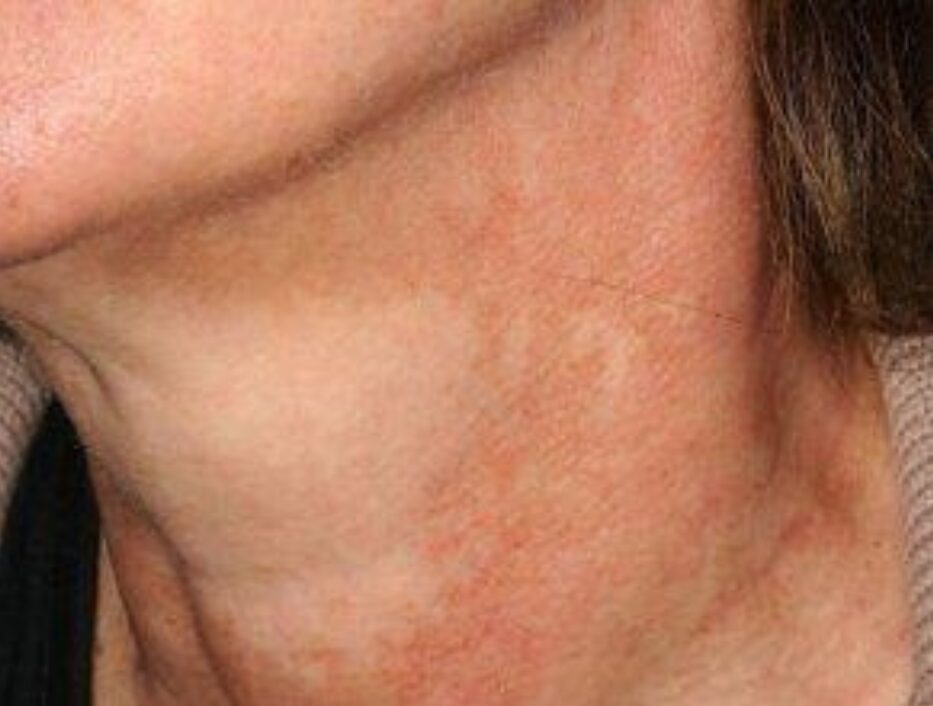
Poikiloderma of Civatte is a chronic skin condition that causes reddish-brown discolouration, visible blood vessels (telangiectasia), and skin thinning — typically appearing on the sides of the neck, lower face, and upper chest. The centre of the neck (under the chin) is often spared, creating the distinctive pattern DermNet uses to describe it.
According to the Cleveland Clinic, this pigmentation results from long-term sun exposure, hormonal influences, and genetic predisposition. The condition is benign, but many people seek treatment for cosmetic reasons, as it can contribute to an uneven skin tone and visible redness that make-up rarely conceals.
Common Causes and Risk Factors
The exact cause of Poikiloderma of Civatte isn’t always clear, but several contributing factors are well established:
1. Chronic sun exposure
UV radiation is the primary trigger. Over time, it damages collagen, dilates blood vessels, and stimulates excess melanin production — all of which show up as mottled pigmentation and redness.
2. Hormonal changes
The condition is more common in women over 40, particularly during or after the menopause, when oestrogen levels decline and the skin becomes thinner and more reactive to sunlight.
3. Photosensitising substances
Perfumes, cosmetics, or skincare applied to the neck can sometimes make the skin more sensitive to sunlight, worsening the pigmentation (a phenomenon known as photodermatitis).
4. Genetic susceptibility
Some individuals may inherit a predisposition to this type of sun damage, particularly those with fair skin tones that burn easily.
What Poikiloderma of Civatte Looks Like
You may notice:
- Red-brown or dusky patches on the sides of the neck and chest
- Fine red veins (telangiectasia) visible through the skin
- Mild skin thinning or dryness
- Clear, unaffected skin directly under the chin
While harmless, the visual contrast between affected and unaffected areas can be cosmetically distressing.
Can Poikiloderma of Civatte Be Prevented?
Prevention is often the first line of treatment, and it matters as much after treatment as before it.
- Daily SPF: a broad-spectrum sunscreen (SPF 50+) is essential. Reapply every few hours, especially when outdoors.
- Avoid perfume on the neck: spray perfume on clothes or hair instead of directly on skin.
- Protective clothing: wide-brimmed hats and high-collar tops help limit UV exposure.
- Gentle skincare: use barrier-supporting and antioxidant-rich products to protect the skin from oxidative stress.
At Faciem, we often guide patients on preventive medical-grade skincare tailored to their skin type and condition.
Treating Poikiloderma of Civatte at Faciem Dermatology
Because Poikiloderma combines pigmentation, vascular changes and texture alterations, treatment usually involves more than one modality. At Faciem, each plan is tailored to your skin, often combining the following techniques:
1. Laser and light-based treatments
- Laser Genesis (Cutera) and IPL (intense pulsed light) are among the technologies most often used to address the redness and the pigment at the same time.
- These treatments heat the dermal layers gently, stimulating collagen and reducing visible thread veins and pigmentation.
- Several sessions are usually needed, with change building gradually.
2. Chemical peels
- Mild to medium chemical peels can help resurface the skin, soften uneven pigmentation, and improve texture.
- At Faciem, we use ZO Skin Health peels and tailored formulas chosen to suit sun-damaged or sensitive skin.
3. Topical treatments
- Topical retinoids, niacinamide and azelaic acid help regulate pigmentation and promote cell renewal.
- Prescription or clinical-grade products from brands like ZO Skin Health may be recommended as part of your at-home maintenance.
4. Red light therapy
- Complementary therapies such as red light therapy can support healing, calm redness and encourage collagen synthesis after a laser or peel treatment.
- This gentle, non-invasive option supports ongoing skin rejuvenation.
Why Choose Faciem for Pigmentation and Skin Health
At Faciem Dermatology & Medical Clinic, we understand that skin conditions are not just about appearance — they affect how you feel every day.
Our clinic combines:
- Doctor-led care from Dr Prasad, a GMC-registered doctor with 20 years’ experience in dermatology
- Advanced technology, including Cutera laser systems
- Protocols that combine medical treatment with skincare education
- Personalised plans covering both in-clinic treatment and at-home maintenance
The aim is straightforward: healthier, more resilient skin, using the same layered thinking set out in Faciem’s approach to hyperpigmentation.
When to See a Dermatologist
If you’ve noticed persistent pigmentation or redness on your neck and chest that doesn’t improve with over-the-counter products, it’s worth having it assessed by a doctor.
At Faciem, your initial consultation includes:
- Skin analysis and diagnosis
- A personalised treatment plan
- Guidance on prevention and long-term care
Book your consultation with Faciem Dermatology & Medical Clinic at 7 Kensington Church St, London W8 4LF, or call +44 20 7131 3539 to talk it through first.