Skip to content

Hyfrecation, also known as electrocautery, is a minimally invasive procedure that removes benign skin lesions — skin tags, seborrhoeic keratoses, warts and cherry angiomas — using a fine probe and low-level electrical energy, usually in a single session. These growths are harmless, but many people choose to have them removed for cosmetic reasons or because they catch and become irritated.
In this guide, we’ll explain what hyfrecation is, how it compares to the other removal options, and what you can expect if you’re considering hyfrecation at our Kensington clinic.
What Is Hyfrecation?
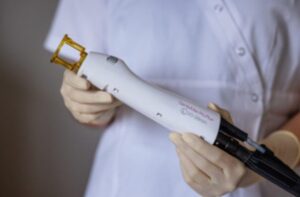
Hyfrecation is a dermatological procedure that uses a fine-tipped probe carrying low-level electrical energy to target unwanted skin lesions precisely. That energy cauterises the tissue, removing the lesion while minimising bleeding and supporting quick healing.
At Faciem Dermatology, hyfrecation is often recommended for:
- Skin tags
- Seborrhoeic keratoses (age spots)
- Warts
- Cherry angiomas
- Other benign lumps and bumps
It’s a well-established technique performed by experienced clinicians, with the added benefit of minimal downtime compared with more invasive approaches.
Why Choose Hyfrecation Over Other Methods?
There are several ways to treat benign lesions. Each has its advantages, but hyfrecation stands out for its precision and recovery time.
Cryotherapy (freezing)
Cryotherapy involves applying liquid nitrogen to freeze and destroy the lesion. While effective, it can sometimes cause blistering or temporary discolouration, or require multiple sessions for complete removal.
Laser removal
Laser technology is often used for pigmentation and other skin concerns. It can be more expensive, and is not necessarily more effective or safer for a small benign lesion. Dr Prasad will assess your lesion and discuss all the options with you.
Surgical excision
Surgical removal is a reliable option for larger or suspicious lesions. However, it typically involves more downtime and a higher risk of scarring, and will require sutures.
Hyfrecation (electrocautery)
- Quick, precise and minimally invasive
- Suited to small, benign growths
- Minimal scarring and downtime
- Usually requires only one session
What to Expect During Hyfrecation at Faciem
Your treatment journey begins with a thorough consultation at our dermatology clinic in London. We assess your skin and confirm whether the lesion is suitable for hyfrecation.
The procedure itself:
- Local anaesthetic is applied for comfort
- A fine probe delivers low-level electrical energy directly to the lesion
- The lesion is cauterised and removed within minutes
- Aftercare guidance is provided to support smooth healing
Most patients resume normal activities immediately after treatment, which makes this a convenient option for those with busy schedules.
Safety & Aftercare
Hyfrecation is well tolerated when performed by trained clinicians. Mild redness or a small scab may appear at the treated site, and these usually settle within a week or two.
Aftercare tips include:
- Keeping the area clean and dry
- Avoiding harsh skincare products until healed
- Applying SPF daily to reduce the risk of pigmentation changes
Hyfrecation at Faciem Dermatology
At Faciem, we combine expert knowledge with a patient-first approach. Whether you’re addressing a cosmetic concern or seeking reassurance about a new skin change, our doctors assess the lesion first and tailor treatment to you.
We also offer complementary treatments that support skin health and appearance, including:
This broader approach looks after the surrounding skin, not just the lesion itself.
Conclusion: A Simple Option for Clearer Skin
Benign lesions may be harmless, but they don’t have to be permanent. Hyfrecation can remove them quickly, in most cases in a single visit, without the downtime of surgery or the expense of laser therapy.
Ready to take the next step? Book a consultation at our Kensington clinic and we’ll talk through the option that suits your skin.